
Farmacia
Sa Coma
Mallorca · Avda. de las Palmeras 33
Today in Sa Coma
Official AEMET data for Sa Coma beach. If the information is not current, we do not display it.
Farmacia Sa Coma
We are in the heart of Sa Coma, in a place that welcomes people from around the world. Our aim is simple: to listen, guide you and help you find a clear answer when you need one.
Pharmaceutical advice, dermocosmetics, sun protection and visitor support with a professional, practical and friendly approach.


What we do
Four areas that sum up how we work: listen first, recommend second.
Professional guidance for questions about health, medicines and self-care, explained clearly.
Routines and products tailored to your skin type, your needs and your lifestyle.
Advice for changing temperatures, sore throats, dry skin, lips, hydration and small seasonal first-aid essentials.
If you are on holiday, we can help in Spanish, Catalan, English or German so you can explain what you need with confidence.

Mediterranean autumn
Mornings and evenings can feel cooler, and wind or humidity sometimes take their toll. We can guide you on throat comfort, hydration, dry skin, lips and a few simple essentials so you can keep enjoying the outdoors.
Supplements, with context
Not all supplements have the same evidence and they are not right for everyone. Here we summarise what they are used for, how they are commonly taken and when it is worth asking before starting.
When well indicated
Useful in specific contexts. Evidence does not mean everyone needs them.
Strength, power and support for resistance training.
What we know: creatine is one of the best-studied sports supplements. The EU authorises health claims at 3 g/day for repeated high-intensity exercise and for adults over 55 doing resistance training.
How to take it: plain creatine monohydrate every day. A loading phase is not essential.
Cautions: seek advice first if you have kidney disease, are pregnant or breastfeeding, or have a relevant medical condition.
Helps you reach daily protein needs when food intake falls short.
What it is for: making it easier to reach protein targets for muscle maintenance and recovery, especially with exercise, calorie restriction or low appetite.
Choosing one: whey if dairy is tolerated; plant protein if preferred, ideally with a good amino-acid profile.
Cautions: allergies, intolerances and kidney disease require individual advice.
Most relevant when oily-fish intake is low or there is a specific goal.
What it may do: help cover a low intake of EPA and DHA. High doses for triglycerides are a medical use and should not be improvised.
How to take it: with food is often better tolerated.
Cautions: ask before high doses if you take anticoagulants/antiplatelets or have surgery planned.
Bone, muscle and immune function when vitamin D intake or status is insufficient.
What we know: vitamin D has established roles in bone, muscle and immune function. More is not automatically better.
How to use it: if deficiency or clear risk exists, the dose should match the situation.
Cautions: avoid unsupervised megadoses; excessive vitamin D can be toxic.
Replacement of water and salts during prolonged exercise, heat or heavy sweating.
When they make sense: prolonged sport, heavy sweating, intense heat or substantial fluid losses.
How to choose: look especially at sodium and, depending on the situation, carbohydrates and other electrolytes.
Cautions: hypertension, kidney disease or heart disease require more care with sodium and potassium.
Context matters
They may be useful, but formulation, dose, goal and the person can change the recommendation.
Marketed for tiredness, muscles, cramps, stress and sleep.
What is clear: magnesium is involved in normal muscle and nerve function. Supplementation makes most sense when intake is insufficient or there is a specific indication.
The nuance: not every cramp or sleep problem is due to low magnesium. Citrate may have a more laxative effect.
Cautions: it can cause diarrhoea and interact with some antibiotics and other medicines; particular care is needed in kidney impairment.
Skin and joints: possible modest benefit, not an instant “rebuilding” effect.
What to expect: some trials report small improvements in skin hydration/elasticity or joint discomfort.
Vitamin C: it is required for normal collagen synthesis, but extra vitamin C does not guarantee better results if the diet is already adequate.
Cautions: check the source if you have relevant allergies.
Gut health and microbiota, but there is no universal “probiotic”.
What we know: some strains and combinations have evidence for specific digestive situations; others do not.
How to choose: look at the strain, dose, goal and duration, not just the brand.
Cautions: seek advice first in severe illness or immunosuppression.
Stress and sleep: some short-term evidence, but it is not risk-free.
What we know: some preparations may help stress or insomnia in the short term; evidence for many other claims is insufficient.
Cautions: avoid in pregnancy and breastfeeding; take particular care with thyroid or liver problems, autoimmune disease, sedatives and other medicines.
Duration: long-term safety is not well established.
Popular for sleep, but they are not equivalent and do not solve the same problem.
Melatonin: has a clear role in circadian timing and may help in specific situations such as jet lag or some sleep-onset problems.
L‑theanine and glycine: there are small studies with interesting findings, but less clinical evidence.
Cautions: consider drowsiness, pregnancy/breastfeeding and sedating medicines.
Blood glucose, cholesterol and weight: very popular online, but it is not “natural Ozempic”.
What we know: there are signals of possible metabolic effects, but studies are heterogeneous and do not support simple weight-loss promises.
Cautions: it may interact with medicines. It should not be used during pregnancy or breastfeeding and should not be given to infants.
Key message: it does not replace prescribed treatment.
Joint discomfort and inflammation: some positive findings, but formulation matters a lot.
What to expect: there may be modest benefit for some people with joint symptoms, but it does not replace diagnosis or treatment.
Cautions: take particular care with anticoagulants/antiplatelets, biliary disease and concentrated extracts.
Big claims, smaller data
Interesting for research, but current evidence does not justify presenting longevity, cognition or “immune” claims as established facts.
Longevity and “anti-ageing”: one of the most heavily marketed areas.
What we know: there are mechanistic studies and some small human trials, but robust long-term clinical outcomes are lacking.
How we present it: as an area of research, not as an anti-ageing treatment.
Lion’s mane, reishi and cordyceps: focus, energy, sleep and “immune support”.
What we know: there are preliminary signals for some effects, but clinical evidence is limited and heterogeneous.
What to check: exact species, part used, extract, standardisation and quality control.
Cautions: possible interactions, allergies and products with uncertain composition.
A supplement can be useful without being essential. Diet, your goal, medicines and health conditions change the recommendation.
We can review the label, actual dose, possible interactions and whether it makes sense for your goal before you buy it.
12 August 2026 · Total eclipse
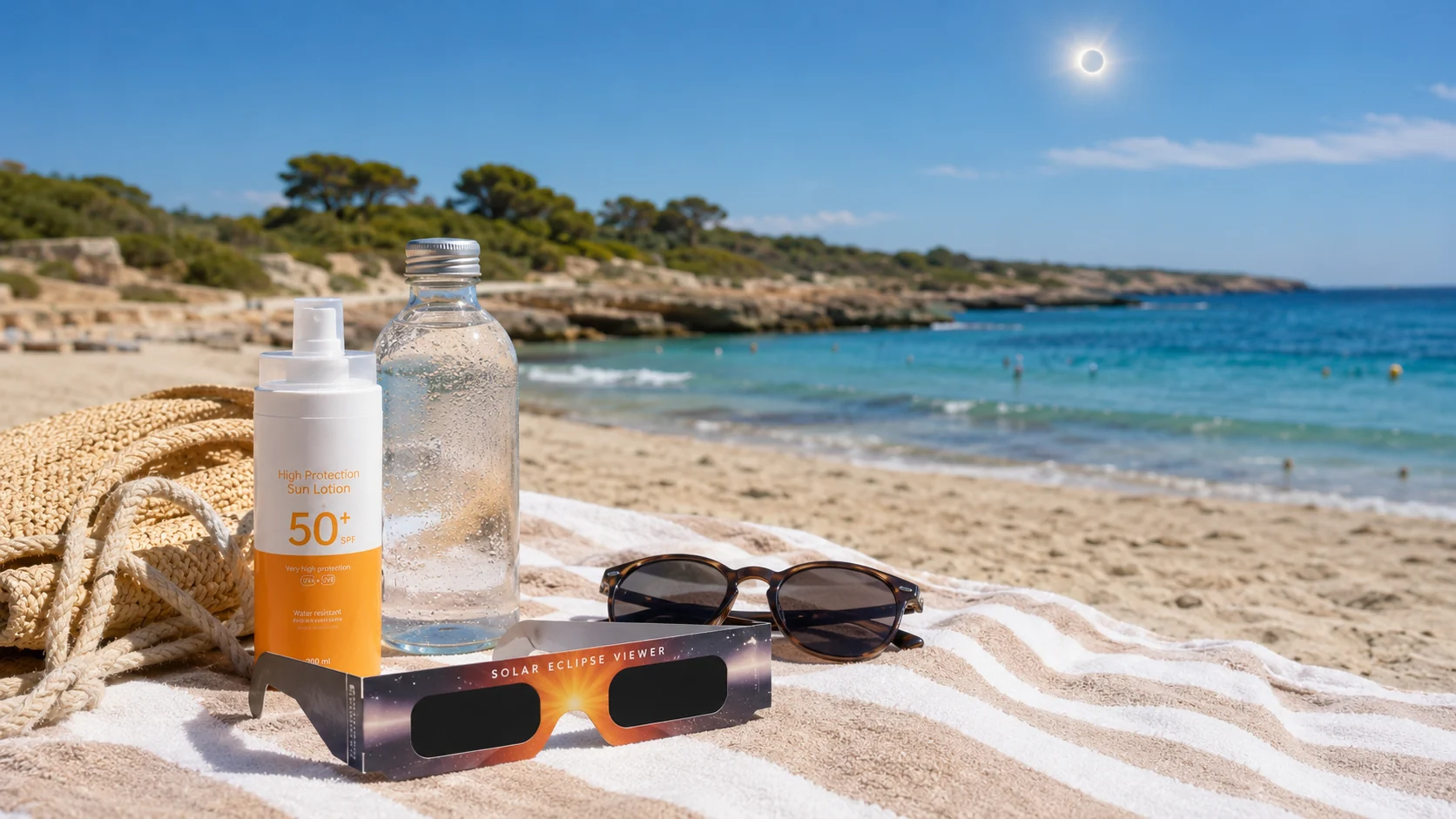
In the Balearic Islands, the eclipse will be total across part of the territory. During every partial phase, looking directly at the Sun requires a dedicated solar viewer.
This is the international standard applicable to filters intended for direct observation of the Sun.
Do not use them if the filter is scratched, punctured, torn or otherwise damaged.
Once the viewer is correctly in place, then look towards the Sun. Ordinary sunglasses are not safe for solar viewing.
Do not remove the glasses while any part of the Sun’s bright face is visible.
If you are within the path of totality, you may remove the viewer only when the Moon completely covers the Sun’s bright face. As soon as the first bright point reappears, put the viewer back on immediately.
Do not look through binoculars, telescopes or cameras while wearing eclipse glasses. These devices require dedicated solar filters fitted in front of the optics.
Help children put the glasses on correctly and make sure they keep them on whenever protection is required.
Important: an “ISO” marking printed on a product does not, by itself, prove that it is safe. Buy viewers from a reliable source and follow the manufacturer’s instructions.
13–14 August · After the eclipse
Solar retinal injury can occur without pain. If you think you looked directly at the Sun or your eclipse glasses may have failed, watch for any visual changes.
Health updates
Late-summer storms and heavy rain can disrupt routines, travel and, in some cases, electricity supply. It is a good time to review regular medication and your household first-aid kit.
Balearic Islands Emergency Service 112 recommends keeping a first-aid kit and the family’s medicines available. If you take regular medication, check that you have enough for the next few days.
Check the packaging and patient leaflet. Medicines requiring 2–8 °C must be kept refrigerated. If you cannot be sure that storage conditions have been maintained, ask before using or discarding them.
During storms or heavy rain, prioritise guidance from AEMET and Emergency Service 112 and avoid unnecessary travel.
The 2026–2027 school year in the Balearic Islands starts on 10 September. Before routines and busy mornings return, a simple review of the family medicine cabinet and regular medication can help avoid problems.
Review the products you normally use, expiry dates and whether medicines still have their packaging and patient leaflet.
If a child or adult follows regular treatment, make sure there is enough medication for the start of term and continue the instructions given by the healthcare professional.
Antibiotics do not cure viral infections such as the common cold or flu. They should only be used when prescribed by a doctor.
After heavy rain, small pools of standing water may remain. Over the following days, while temperatures stay suitable, these can become breeding sites for mosquitoes.
Empty or cover containers that can collect water, such as buckets, plant saucers or small outdoor containers.
Clothing that covers the skin and correct use of repellents can help reduce bites. Always follow the product instructions.
Seek medical attention for breathing difficulty, general symptoms or any reaction that causes concern.
As September ends, temperatures become more variable and we spend more time indoors. Early-season colds are usually mild, but it helps to know what self-care is reasonable and which signs need assessment.
Antibiotics do not work against the common cold or flu and should not be taken without a medical prescription.
Rest, adequate fluids and following the directions for any medicines you use can help manage symptoms.
Seek advice for breathing difficulty, marked worsening, persistent fever or when the person affected is particularly vulnerable.
Respiratory syncytial virus (RSV) is the main cause of bronchiolitis. In the Balearic Islands, the 2026–2027 programme covers babies born between 1 April 2026 and 31 March 2027.
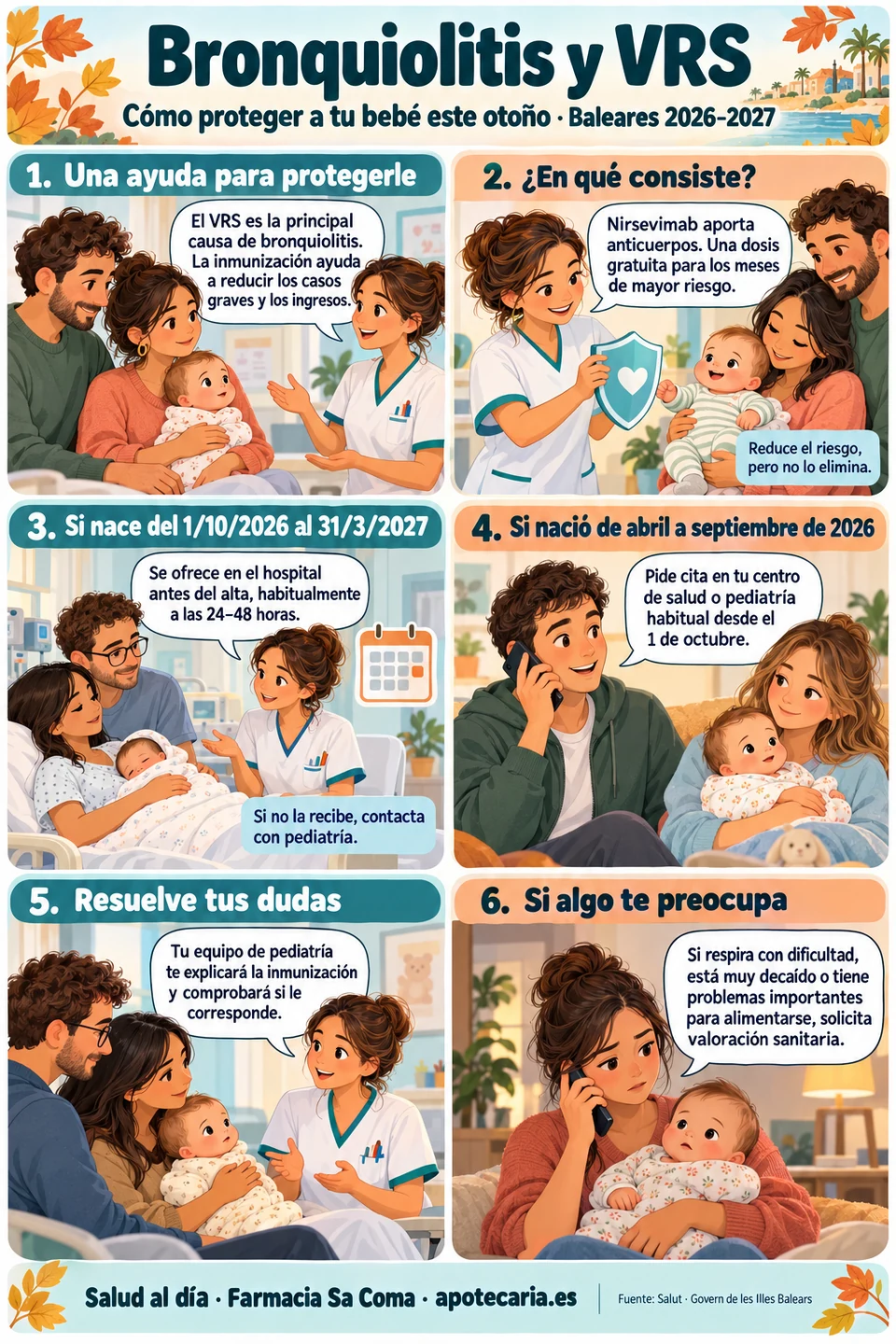
Immunisation is offered in hospital before discharge, usually during the first 24–48 hours of life.
Protection is offered from 1 October at the health centre or usual paediatric clinic. It is advisable to request an appointment at the start of the programme.
Seek medical assessment if there is difficulty breathing, marked lethargy or significant feeding problems.
The 2026–2027 campaign began on 5 October in schools, care homes and home-care services. From 19 October it opens to the wider population of the Balearic Islands.

The campaign includes children from 6 months to 11 years, as well as groups for whom vaccination is particularly recommended.
It can cause fever, headache and muscle pain, cough, sore throat and general malaise, and may lead to complications in vulnerable people.
Vaccination is the main preventive measure against flu and its complications. If you are unsure about your situation, ask your health centre.
Congestion, sneezing, cough or a sore throat can occur in different conditions. How symptoms begin, fever and features such as itchy eyes or nose may provide clues, but symptoms alone do not always give a clear answer.
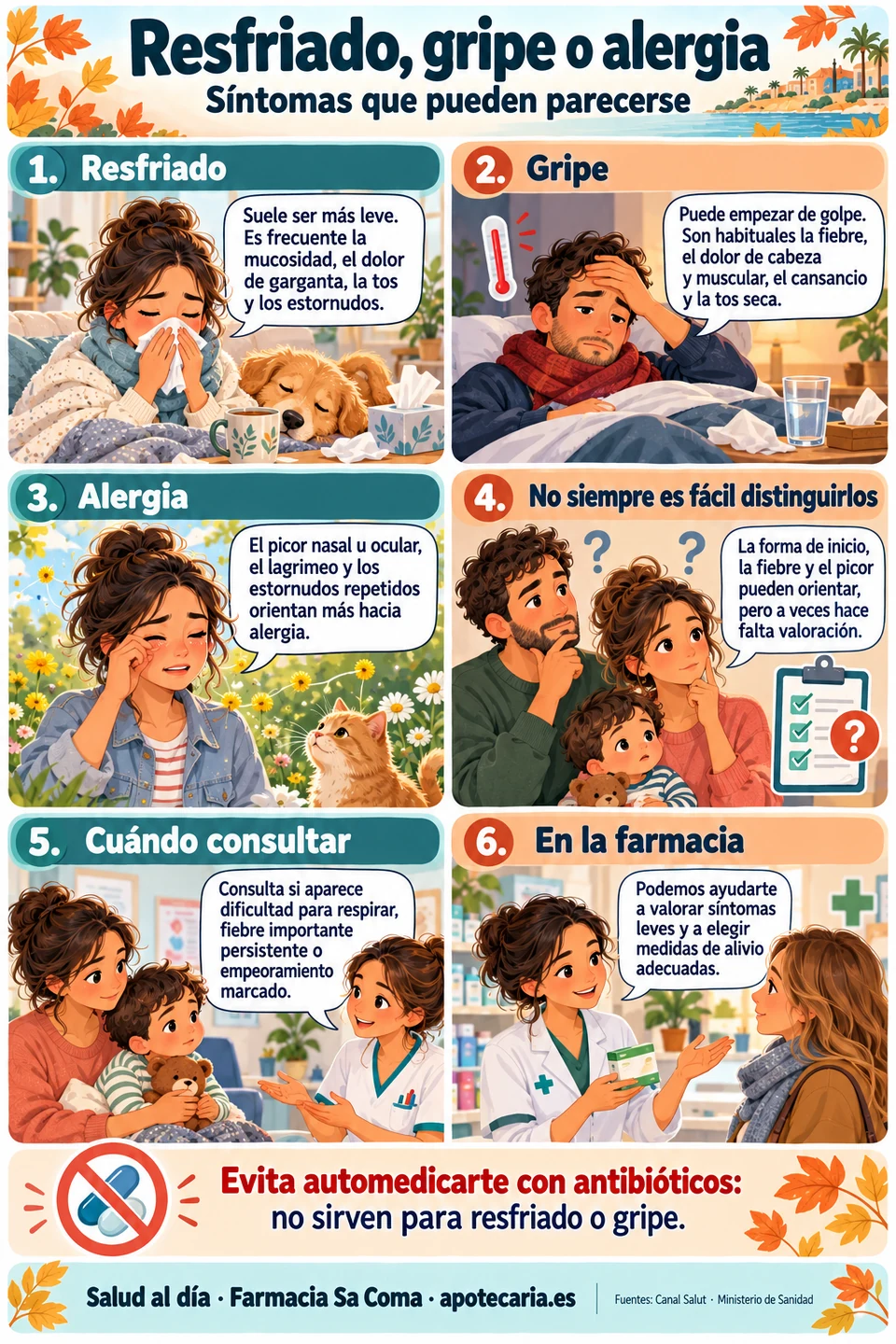
A runny nose, sore throat, cough and sneezing are common, and symptoms usually do not start suddenly.
Fever, headache and muscle pain, tiredness, dry cough and sore throat are common.
Itchy nose or eyes, watery eyes and repeated sneezing are common features of seasonal allergy. If you are unsure or symptoms are severe, seek advice.
A medicine being available without a prescription does not mean it is risk-free. Products for colds, cough, pain or congestion should be used according to their instructions and with other medicines and health conditions in mind.
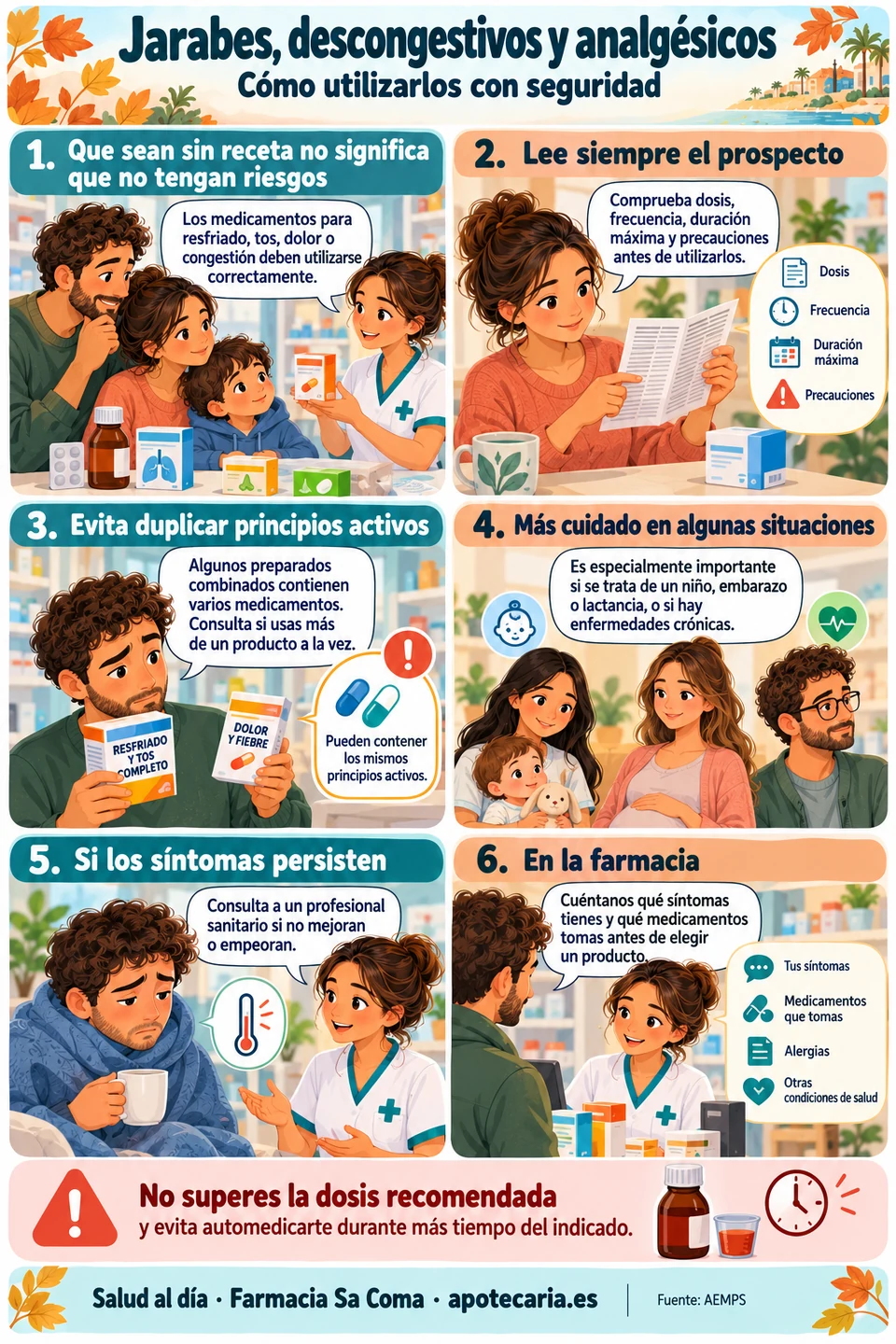
Check the dose, frequency, maximum recommended duration and precautions before you start using the medicine.
Some combination products contain several medicines. If you use more than one product, ask for advice to avoid accidentally taking the same active ingredient twice.
The AEMPS recommends respecting the maximum duration of use and consulting a healthcare professional if symptoms do not improve or get worse.
This week near Sa Coma
A selection of activities and events of interest in Sa Coma and the surrounding area.
Friday 21 · 20:00
Poblat Talaiòtic de s’Illot · Vetlades d’Estiu 2026.
Health tip: at amplified-music events, move away from loudspeakers if the sound feels intense and take particular care of children’s hearing.
Friday 28 · 22:00
Plaça de l’Església de Son Carrió · Vetlades d’Estiu 2026.
Health tip: avoid staying beside loudspeakers for long periods and use hearing protection when sound levels are high.
Our team
Behind the counter is a team that knows the pharmacy, the area and the questions that come up both in everyday life and while you are on holiday.
Open Google Maps for directions and the latest opening information before you come.
To avoid showing outdated opening times, please check our Google Maps listing for the latest hours.